Turning personal adversity into entrepreneurial success, Additional Lengths became a thriving direct-to-door business for consumers to purchase premium clip-in extensions at an accessible price point and transform their hair at home. “Business-wise, it was very much a man’s world at the time,” Victoria says.
“Hair extensions hadn’t gone mainstream yet, the Internet was fairly new and we didn’t have e-commerce websites. Everything was still physical stores or phone orders. So starting a business then was challenging but I knew what I wanted to do.”
In 2013, Additional Lengths became the exclusive online home for Remi Cachet, a line designed purely for professional hairdressers and Victoria’s second successful business launch. With over 60 shades and 14 application systems – from clip-in extensions to volumisers and ponytails – Remi Cachet offers a completely bespoke result for clients, whether they are looking to enhance their colour, length or volume.
Fast-forward to 2026 and Additional Lengths has grown from a bedroom start up to a multi-million-pound business. Committed to innovation and inspiring female founders, Victoria joined Remi Cachet as a patron of the British Beauty Council and she is an ambassador for the King’s Trust. Additional Lengths is also the first UK hair extensions company to be officially recognised as a Certified B Corporation, demonstrating Victoria’s ethical business practices and pioneering green solutions, which include a Hair Recycling Initiative, in partnership with the Matter of Trust Clean Wave Campaign, turning used extensions into eco-friendly ‘hair mats’ that help to clean up oil spills.
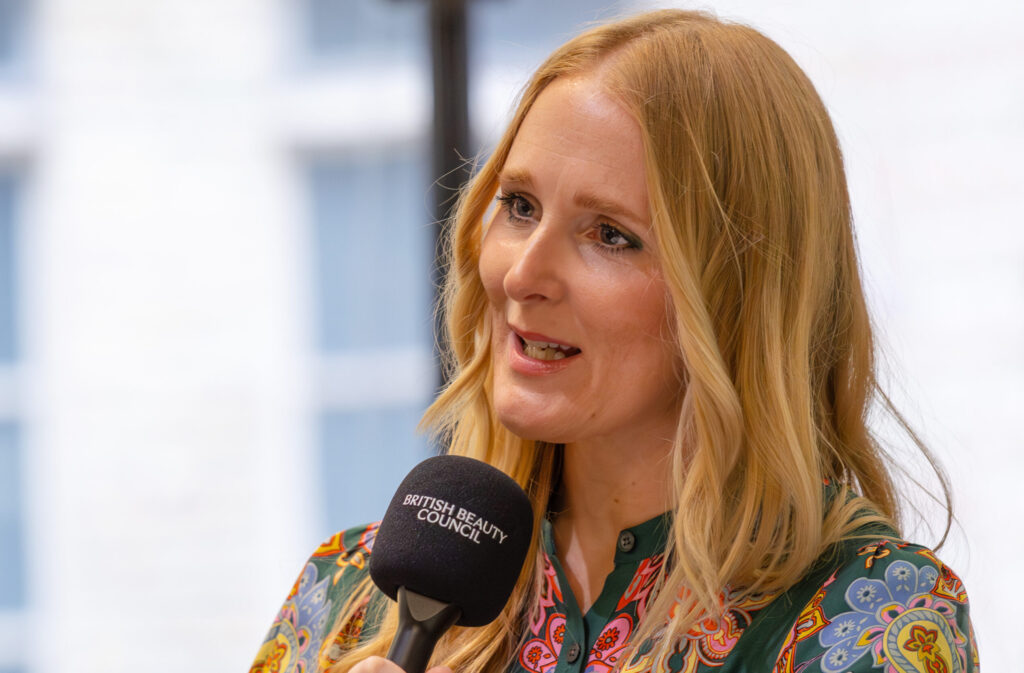
In an interview for the British Beauty Council, Victoria discusses her drive to be the biggest hair extensions player in the world and why innovation and raising standards across the sector guarantees its long-term growth and success.
Additional Lengths was already a hugely successful consumer hair extensions business. Why did you decide to launch Remi Cachet for trade professionals?
I’m a hair professional at heart. Every decision that I made, especially with Remi Cachet, was for other hair professionals to help them grow their business and evolve the extension space from what it was.
When I started my first business, extensions weren’t used by hairdressers. There were only a couple of trade brands and the only products you really got years ago were weaves. They didn’t diversify because they weren’t users of the products – they were just a business – whereas I was a user so I knew the gaps that needed filling from a product point of view. The old-style wefts were a stitch top, which folded over and were itchy on the head so I created the UK’s first flat weft top, which is still popular today. Then there were the glue-in pre-taped bonds and fusion extensions [where individual extensions are tipped with keratin or an adhesive and fused to the natural hair using a heated tool] but these can damage people’s hair, so I brought ring bond extensions to the UK, which attach without heat or glue.
With my first business, Additional Lengths, I wanted to speak to the end user to get them needing extensions, so they would speak to the professionals and say, “Would you fit these for me?” That momentum built over time and professionals started wanting more education on how to apply extensions. Additional Lengths couldn’t serve them because it had built a reputation for being a budget consumer-focused brand. I needed to create something completely new that only spoke to the trade space. Remi Cachet was a copy-and-pivot moment. It replicated my business but in a different way with different products and high-spec quality. When you capture a trade professional who relies on your product and service for their business growth, that’s when you hook the customer.
Some stigmas and stereotypes still exist around hair extensions. What do consumers need to know about the new era of extensions?
People are using extensions in a variety of ways – more than they ever did before. This is the new era of hair extensions. We’ve gone way past the stereotypes now. The idea that extensions damage your hair or were poorly applied was probably more true many years ago when they weren’t as popular. But now they’re so accessible and so many people are wearing extensions that you can’t even tell are there. I think that’s really always been my purpose for hair extensions. You should never be able to tell someone’s wearing extensions – they should be minimal and discreet.
A good example of that is my new Babylights colour range featuring fine, softly woven highlights so there are no harsh lines. What I’ve noticed in the last 12 months is that people are getting rid of their root stretch [a hair colour technique where a darker colour is blended or ‘stretched’ from the root down the hair strand] and are having highlights again at the root. If you’re paying for that in a salon, you’re paying a lot of money for a full head of highlights. What you don’t want to do is put an extension in that has a solid colour and matches your mid lengths and ends. So that’s why I created Babylights as you get a graduated highlight from the top of the extension that will blend in seamlessly.
It’s just part of this evolution of hair extensions, which for me is about elevating confidence. They don’t just make you feel good – you look great as well.
Hair thinning is a huge topic right now, which makes hair extensions feel more relevant than ever. How can the extensions industry respond and where will this lead economically in the future?
The hair extensions sector has seen the biggest changes in the last six to eight years. Everyone was worried about losing their business during Covid because our industry was shut for seven months of that first year. Actually, we’ve come out bigger and stronger after that period of time, with a lot of people choosing hair extensions that had never tried them before. There was a shift in mindset. Women will continue to spend money on themselves, and I think that’s a strength. We offer tangible services – it’s something AI can’t take over and as hair thinning becomes an increasing concern, whether due to menopause, stress or GLP1 treatments, hair extensions offer a solution for restoring volume and confidence.
For many years, extensions were only available in specialist salons because hairdressers didn’t want to tap into them. But that’s changing. The extensions category as a whole has exploded and generalist hairstylists are recognising that they’re missing a trick if they’re not offering extensions, too. Women are consciously deciding where they want to spend their money so the important thing for generalist salons is that they build out their service menu. This is where they can win because generalist hairdressers can do anything with hair – they can cut, colour and redesign. Most of the hair professionals coming through college probably wear extensions or are familiar with them and will want to offer them to clients. So if you’re a nearly retiring salon owner and you just can’t be bothered doing extensions, you need to think about them for the younger professionals that work in your salon as they are going to bring in that revenue stream.
What’s really key at this moment in time, especially with the economic challenges, is pitching yourself in the right location and having a crossover of services with other professionals. Your clients can go to someone who is offering a different service to you; their clients can come to you for your specialised service. Better still, have everything they need – nails, hair styling, colour and extensions – all under one roof. Everyone is busy so they want one appointment every two months to get everything done.
Why was it so important to you to set a new benchmark for the hair extensions sector by becoming a Certified B Corporation?
Demand is now outweighing supply and the growth rate of new hair from donors. It takes five years minimum for somebody to grow their hair 20 inches. And 20 inches is one of the most popular extension lengths. So I would always advocate using a product that is reusable time and time again. 90-95% of our extensions are fully reusable for up to 24 months with good aftercare because they’re ring bond extensions. When the hair grows, the product grows with it so all you do is renew the rings, but the extension itself is just removed and then repositioned and refitted. Fusion bonds shed over time and when you remove them, you break down the bond so there’s nothing holding the hair together. You might only be able to reuse 50% of what you’ve removed, which is a constant replenishment of new hair.
Like everyone, we used to sell extensions in long fancy packets. I just sat there and thought, “I’m sending 20 packets of hair to a salon and the packet has gone in the bin. What a waste of cardboard, plastic sleeves and packaging.” So six years ago, I redesigned all our packaging. The hair can be rolled up so it’s small and compact, making it easy to ship, and I introduced biodegradable packets.
It’s also really important to understand the supply chain. I’ve known some of our donors for years and they all get paid directly and it’s their choice to donate hair. It’s like any good quality product. It’s about knowing where you’re sourcing from and doing it in a way that is ethical and supporting people.
All this is why we’re the first UK hair extension company to get B Corp certification. Our suppliers and everything we say is now audited and validated. That’s something not a lot of people can sit there and say. It’s about leading by example and daring to be different. I’m so proud of every decision I made and stood behind because it’s built our reputation and helped us get to where we are with B Corp.
What advice would you give to budding female entrepreneurs?
I don’t think anything should be started on a whim. It’s really important to know your craft because people don’t just buy what you’re selling – they buy your honesty, your reputation and your knowledge. If you don’t know absolutely everything about your product or service, then you’re probably going to fall at the first hurdle because, the minute somebody lacks trust in what you’re saying, you won’t get that repeat custom and word of mouth. I want people to feel as though they’ve got a good return on investment because that’s what’s going to bring them back. You want that revolving door of customers.
You also need to lean on people because founders can be control freaks. You can’t work with people well if you don’t relinquish some tasks, so offload certain things so that you can comfortably focus on others. And if you’re going to work on your own, then your biggest friend will be technology.