The textured hair market is estimated to be worth $10 billion and has a compound annual growth rate of around 5% – however, brands and businesses are failing to offer the products, solutions and education to these consumers, particularly those with Type 4 hair.
To highlight the unique challenges that face people with the tightest curls, Winnie Awa has harnessed the information gathered at 10 million different data points via Carra. The platform, which provides tailored product recommendations to users via data collection, harvests intel via social media conversations, trend analysis, product data and more.
On the intricate findings, Awa said: ‘I hope this report whips up an innovation frenzy, I would like to see a 360-degree change with inclusivity bedded in from the start. From the product ideation, creation and testing process, the supply chain, the campaigns and finally through to the products hitting the shelf. I hope it helps everyone with tight, rich and luscious coils feel seen, catered for and represented.’
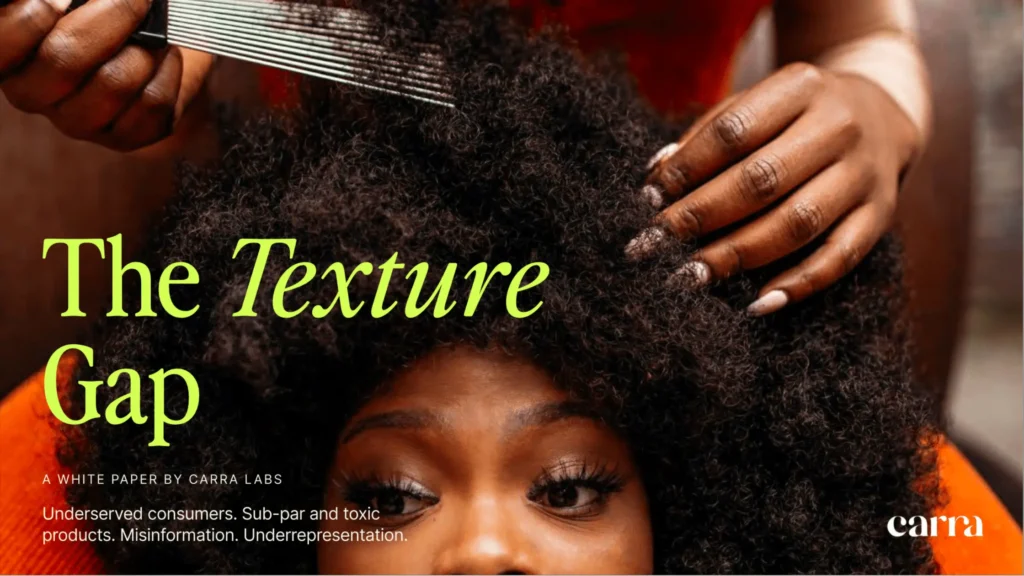
The Texture Gap highlights the increasing conversations surrounding Type 4 hair, the knowledge and support gaps that exist for the consumer, and the strategic actions brands can take to cater for – and celebrate – this consumer. Here’s what we learnt…
The Type 4 community seek solutions online – but often can’t find what they are looking for
Engagement surrounding textured hair conversations online is reaching new heights, with Type 4 peaking at 62% – that’s 8x more than other hair types.
Interestingly, but unfortunately, not unexpectedly, social conversations surrounding other hair types dropped and continue to decrease, after Covid-19.
However, Type 4 consumers still turn to online which not only highlights increased cultural conversations but also an ongoing dissatisfaction with the information and education offered by brands IRL.
The Texture Gap reads: ‘They (Type 4 consumers) are frustrated with the advice they’re getting (or, quite often not getting) and are tired of all the ‘easy’ hair care lies they’ve been fed. At the same time, they continue to celebrate their natural hair by sharing progress points and successes along their hair journey.’
Routines are hard to perfect, and brands aren’t helping
Due to a lack of understanding when it comes to treating and maintaining Type 4 hair, consumers consistently switch and change their routines to find the right one. This is not only hurting their wallets but also means they are unable to master ‘basic techniques’.
The whitepaper uncovers that although Type 4 hair should be cleaned every 7-10 days, 67% of these consumers wash their hair every few weeks, with almost a third going one to two months between wash cycles.
What can brands do to fill this knowledge gap?
‘Highlight how products can be used within their routine to support consumer needs and lifestyle requirements, and how products should be optimally combined to achieve hair goals. Highlight relevant ingredients and provide education on their efficacy for type 4 curls,’ the report reads.
Leaving Type 4 concerns unaddressed is a cause for health concern
From alopecia to the potentially toxic chemicals included in the targeted products often used by people with textured hair, Type 4 consumers are increasingly aware of the health risks tied to their curls.
‘Hair loss or hair thinning concerns are highest among Type 4 and especially Type 4c consumers (45% for Type 4c vs 29% for Type 2),’ highlights the report, whilst putting the onus on healthcare professionals to provide early diagnosis for people with various hair loss conditions.
The Texture Gap puts the various health repercussions down to a ‘lack of consideration of this customer in research and development (which) means customers in this target group are forced to make suboptimal choices which costs them more in terms of their health.’
Read The Texture Gap here.