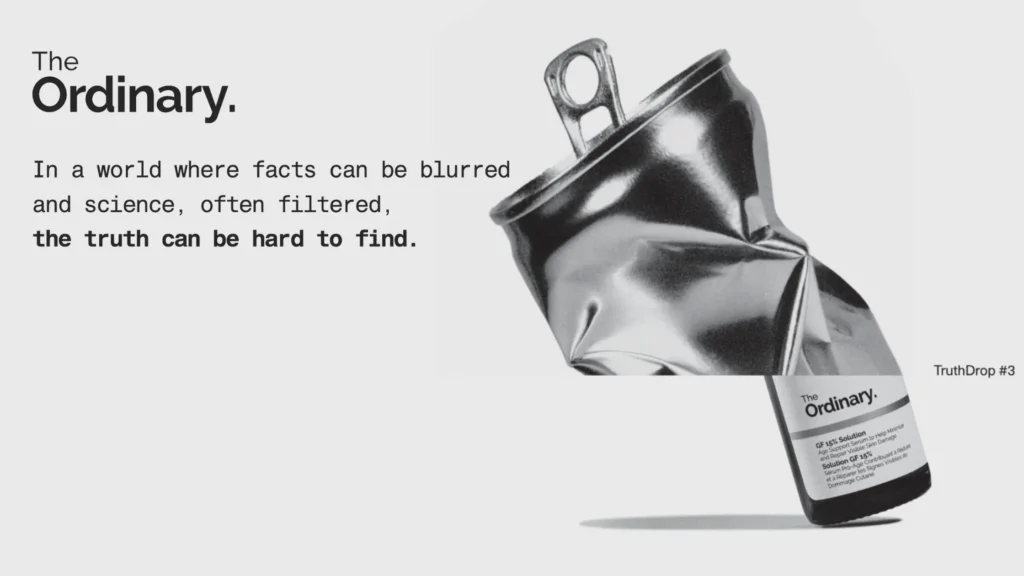
In line with its ongoing commitment to increase accessibility and transparency in the beauty industry, the brand has launched a new platform to tackle this issue head on. ‘The Truth Should Be Ordinary’ is a digital platform specifically designed to offer open source access to beauty’s scientific papers that would usually be behind a paywall or have limited access.
The brand hopes that this foray will not only increase consumer education but also act as a call to action for industry to consider its current approach to (mis)information. Silva explains: ‘We envision ‘The Truth Should Be Ordinary’ evolving into a central hub for open-access scientific education within the beauty industry… Our goal is to build a robust, trusted resource that not only empowers consumers but also encourages collaboration among industry professionals to drive transparency and innovation forward.’
Currently hosting nine articles, the online directory focuses on key areas of ‘widespread consumer concern’ including animal testing, parabens and animal testing. Each of the articles is backed by brand insight from The Ordinary and drives readers to download a full scientific white paper.
‘We’re prioritising consumer trust and education over traditional marketing strategies,’ says Silva, touching on the marketing jargon that can often make scientific claims confusing and hard to digest for shoppers.
Similar to green-washing, but with a focus on scientific claims, science-washing occurs where science is either being used beyond what evidence shows, without appropriate credentials or in instances where science cannot give the answer.
Shoppers are becoming more and more adept with spotting the signs of a claim that doesn’t add up thanks to an increase in education via social media, reviews and easier access to experts. What’s more, their interest in ‘science-backed’ products is peaking with biotechnology, derm-founders and cutting edge ingredients becoming mainstream, things that have previously been coveted by beauty industry insiders.
When it comes to beauty education via socials, the British Beauty Council is also doing its bit to ensure those spreading beauty’s messages are spreading the right ones. Via it’s revamped Skin School, in collaboration with No7 Beauty Company, the Council offers open-source modules covering specific topics including ‘tween’ skincare, skin ageing and more.
‘We believe that making science free is an investment in a more informed and empowered community,’ starts Silva, before assuring us that work doesn’t stop here. She says: ‘This year, we plan to expand the site with additional white papers, interactive features, and community-driven contributions from scientists and chemists worldwide.’
You can find out more about ‘The Truth Should Be Ordinary’ here.