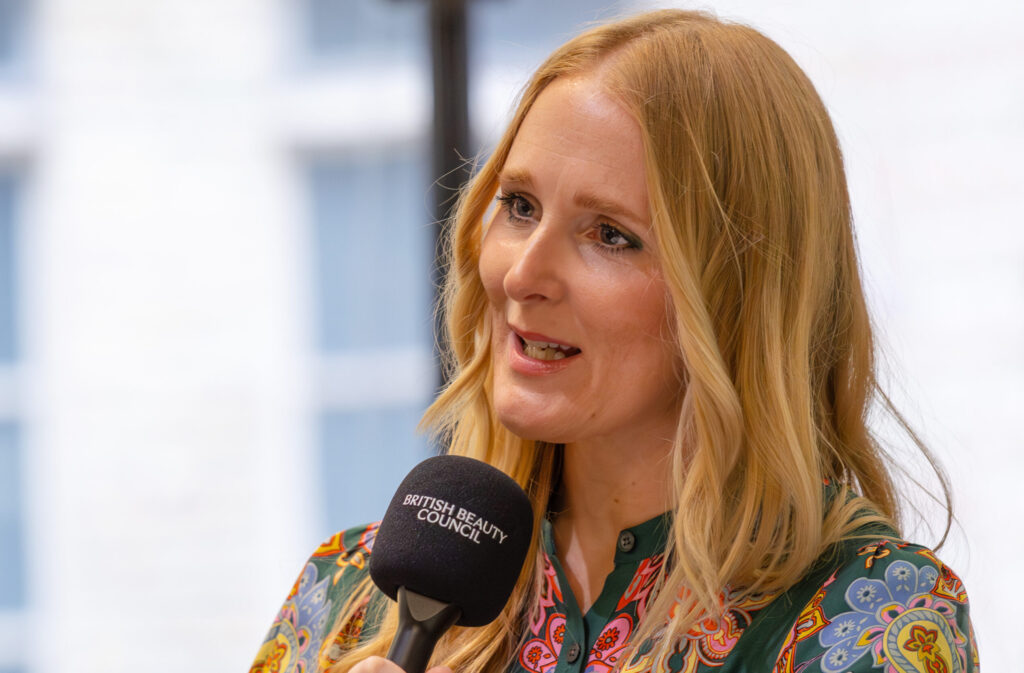
The Committee calls on the Government to act urgently to introduce licensing during this Parliament, alongside the immediate restriction and ‘de facto ban’ of Brazilian Butt Lifts and liquid breast augmentation. The report directly echoes many of the calls for reform championed by the British Beauty Council and Victoria Brownlie MBE, the Council’s Chief Policy and Sustainability Officer, who gave evidence to the committee in July 2025.
Among the evidence provided by Brownlie, which has been confirmed in the report, is a call on the Government to accelerate regulatory action, introduce a licensing scheme for ‘green’ and ‘amber’ categories within this Parliament and restrict high risk ‘red’ category procedures to qualified medical professionals. Brownlie also urged the Government to standardise training by regulating relevant qualifications.
“Following our formal submission and oral evidence session in July 2025, the Committee’s findings directly reflect the data and real-world concerns that were presented, regarding the unique pressures facing the sector and the dangers to the public,” says Brownlie. “The goal is simple: to ensure public safety, uphold standards and professionalism, and protect consumers. The Government must now publish a comprehensive timeline for the full enactment of all measures outlined in their 2025 announcement.”
The Committee’s report identified five key areas where the Government needs to act including PIP Breast Implants, and they note, a decade on from the PIP Implant scandal, the exposed failures are still affecting women today. They suggest mandatory recording of breast implant and explant procedures and adverse outcomes, publishing data annually to support informed consent and improve patient safety. Alongside the implementation of a mandatory cooling-off period between the initial consultation and surgery, to allow patients time to consider the risks and alternatives.
On licensing the report concludes the Government is not moving quickly enough and “should accelerate regulatory action” to prioritise patient safety, with a licensing system for non-surgical cosmetic procedures and premises introduced within this Parliament. Also calling for ‘red category’ procedures, such as liquid BBL’s and liquid breast augmentations, to be restricted immediately to appropriately qualified medical professionals, without further consultation. The report cites that due to the lack of appetite among medical professionals to carry out these procedures, this will act as a ‘de facto ban’ in all but the most essential cases.
A further recommendation is that the Government should also introduce a regulatory framework with consistent training standards for non-surgical cosmetic practitioners that balances competency, patient safety and the accessibility of training for a predominantly female-led workforce. These training routes should consist of Ofqual-approved qualifications and apprenticeships, including funded apprenticeship places in beauty industry SMEs. This would ensure accessibility, while eliminating short, inadequate courses. “Currently, individuals without any formal training can carry out potentially very harmful interventions and often do so in unsafe environments. This ‘wild west’ of procedures is placing the public at risk,” says Sarah Owen, Chair of the Women and Equalities Committee and Labour MP.
The report also identifies a gap in safeguarding mental health. They recommend licensing should include mandatory training on informed consent and psychological screening to identify Body Dysmorphic Disorder. They also note the influence of social media platforms, online influencers and image-editing technologies in shaping beauty standards, normalising cosmetic procedures and contributing to worsening body image, particularly among young women aged 17-21. They recommend the Department of Health and Social Care and the Department for Education should work collaboratively to integrate body image and social media literacy programmes into school curricula, also covering the risks of cosmetic procedures.
On cosmetic tourism, the report calls on the Government to review the need for the NHS to record and publish data on complications arising from cosmetic procedures performed abroad, in order to provide a comprehensive assessment of the financial impact on the NHS. This will also provide robust evidence to educate the public on the risks associated with cosmetic tourism. Another recommendation suggests businesses recruiting patients in the UK for medical treatment overseas should be assessed and brought into a regulatory regime.
The Government is not obliged to accept the report’s findings, but has 60 days to respond and with the demand for aesthetic and non-invasive procedures increasing year on year, the need for action is clear. Oxford Economics data within the British Beauty Council’s Value of Beauty report shows consumer spending on services, including cosmetic procedures, reached £10.1bn last year, up 15%. The British Association of Aesthetic Plastic Surgeons recorded 27,462 procedures in 2024 from medical practitioners alone. Yet the real figure is likely to be considerably higher with non-medical aesthetic practitioners also offering non-invasive treatments but not recorded in these figures.
“The prolonged delay since the previous Government made the original commitment to introduce a licensing scheme has created significant uncertainty, ambiguity and very real safety concerns for members of the public and stakeholders. This delay has also led to an increasing number of uncontrolled social media advertising posts, rogue practitioners and training companies exploiting this governance vacuum which has resulted in actual harm to members of the public,” says Brownlie.
“If we are to truly professionalise the aesthetics sector and protect the public from harm, we must implement, at pace, a national scheme of enforceable licensing underpinned by nationally agreed practitioner education, training standards, and associated premises standards as a matter of urgency. We welcome the Committee’s support in securing this.”