
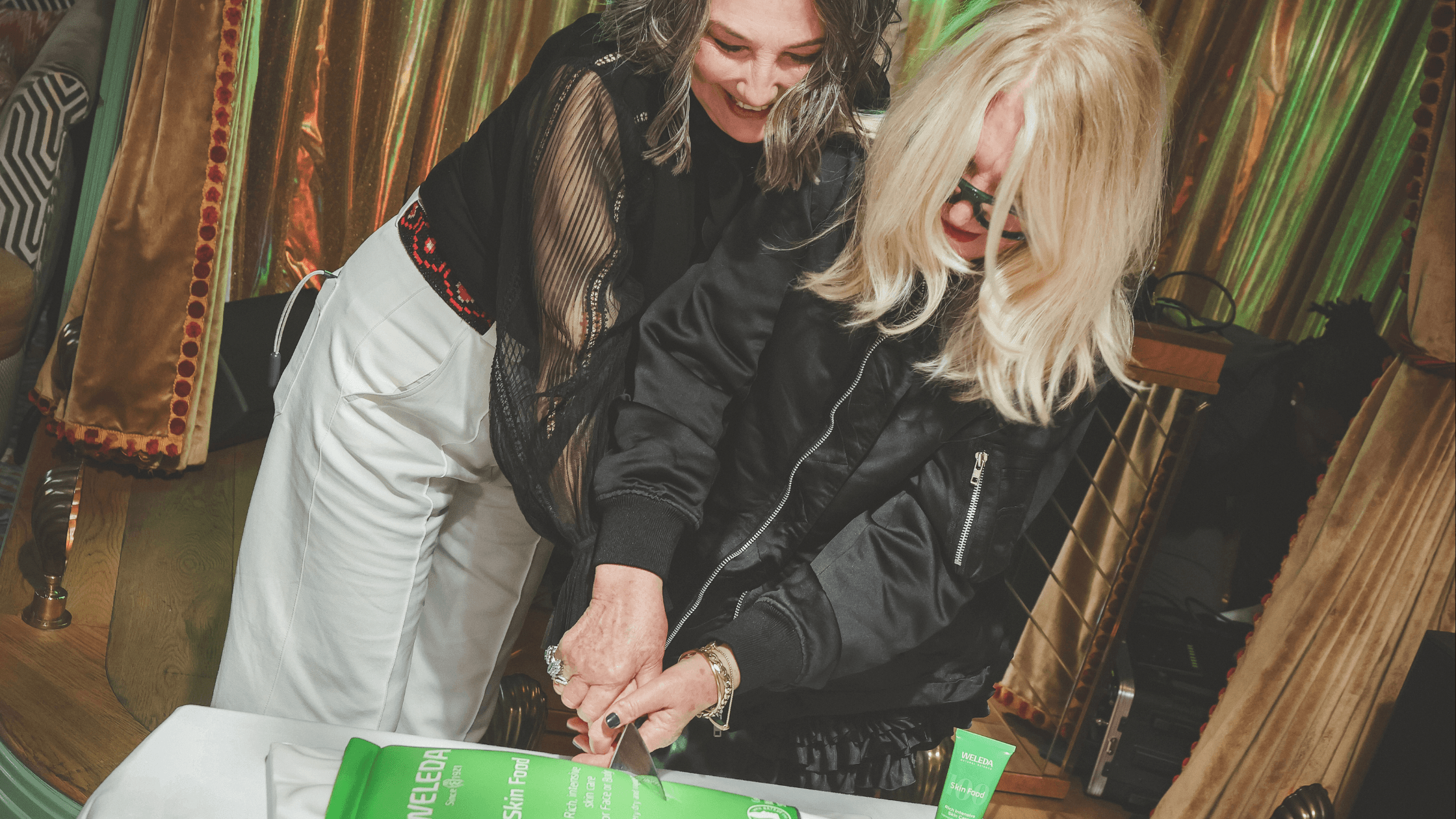
As Weleda’s iconic Skin Food celebrates its 100th anniversary, it stands as a rare success story in modern beauty – a multi-use skincare product that has remained culturally relevant, widely loved and enduringly popular since its launch in 1926. Beloved by generations of consumers, make-up artists and celebrities alike, Skin Food has become a benchmark for enduring success.
The British Beauty Council spoke to Jayn Sterland, Managing Director of Weleda UK, about the milestone. Through her leadership, perspective and long-standing relationship with the brand, she offers insight into why Skin Food continues to resonate so strongly today.
A Century of Simplicity and Trust
For Sterland, the enduring appeal of Skin Food is refreshingly straightforward. In an industry often driven by innovation cycles and shifting trends, Skin Food has remained steadfast in its purpose.
“It has always done exactly what people need it to do,” she explains. “It is an honest, hardworking product that deeply nourishes dry, rough skin, comforts it and leaves it looking healthy and radiant.”
This reliability has proven powerful. Since its launch in 1926, the formulation has never changed – a rarity in modern beauty. Instead of reinventing itself, Skin Food has allowed each generation to rediscover it in its own way, from backstage at fashion shows to viral social media moments.
Its versatility has also played a significant role. Used as a moisturiser, primer, highlighter or targeted treatment, Skin Food transcends traditional product categories. Combined with its natural credentials and accessible price point, it has become what Sterland describes as a “completely democratic product.”
Celebrating 100 Years of Loving Skin
To mark this milestone, Weleda has launched a year-long centenary campaign that reflects both the product’s heritage and its continued cultural relevance.
Running from February to October, the celebrations include a limited-edition 100ml tube, created specifically for the anniversary. Partnerships play a central role, notably with Stella McCartney – renowned for her leadership in sustainable fashion – and celebrated make-up artist Val Garland, who joins as Skin Food’s Make-up Artist Ambassador.
The brand is also embedding itself in key cultural moments. From London and Paris Fashion Weeks to its role as the official skincare partner at the RHS Chelsea Flower Show, Skin Food continues to bridge beauty, fashion and lifestyle.
For Sterland, however, the most important element of the centenary is not the partnerships or activations – it’s the people. “Above all, this is about celebrating the loyal customers, make-up artists and skincare lovers who have championed Skin Food for decades.”
Heritage Meets Modern Expectations
Balancing tradition with modernity is no small feat, yet Skin Food appears to do so effortlessly. The formula remains unchanged, but everything around it continues to evolve.
“It’s a testament to the quality and efficacy of the original formulation that it has never needed reinventing,” Sterland says. “Our role is to preserve that integrity while evolving in ways that matter—particularly in sustainability.”
That evolution is evident across sourcing, packaging and production. Skin Food is made with 100% natural-origin ingredients and is NATRUE-certified, with no synthetic additives, microplastics or mineral oils. Packaging innovations include recyclable tubes made from recycled aluminium and FSC-certified cartons with high levels of recycled fibre.
This approach reflects a broader philosophy: meaningful change rather than change for its own sake.
The Power of Personal Connection
Beyond its commercial success – millions of units sold globally and over 100,000 five-star reviews – Skin Food’s real impact lies in the stories behind its users.
Sterland highlights how frequently the product is described not just as a moisturiser, but as a “skin saviour.” From dry hands and cracked heels to make-up prep and post-travel recovery, its uses are as varied as its audience.
This sense of continuity is rare in beauty, where brand loyalty can be fleeting. Skin Food, by contrast, has built an emotional connection that transcends trends and has built loyalty across generations.
Its long-standing presence in make-up artists’ kits further reinforces its credibility. A backstage staple for decades, it remains a go-to for professionals seeking reliable, high-performance skincare.
Looking Ahead: Evolution Without Compromise
While the original product remains central, the broader Skin Food family continues to expand. New formats demonstrate how the brand is adapting to contemporary routines without losing its core identity.
“What began as one iconic cream has grown into a collection that responds to different needs, textures and occasions.”
At the same time, authenticity remains key – particularly for younger audiences. “Gen Z is increasingly looking for brands with genuine history, trust and purpose,” Sterland notes. “That’s where Skin Food has a real advantage.”
A Personal and Brand Milestone
For Sterland, the centenary is more than a professional achievement – it’s a deeply personal moment.
“Very few products reach 100 years and remain as relevant, loved and successful as Skin Food is today,” she reflects. “To be part of Weleda at this moment is a real privilege.”
She sees Skin Food as a perfect embodiment of Weleda’s founding principles: respect for nature, commitment to quality and a belief in balance between people, planet and profit.
“It has never been about overpromising or chasing trends,” she says. “It’s simply a beautifully made, effective product that has stood the test of time.”
Sustainability as a Continuous Journey
“Sustainability is not a new conversation for Weleda — it has been part of our philosophy since the very beginning. But like any responsible business, we know we can always improve and evolve,” says Sterland.
Packaging innovation plays a key role in this evolution, with tangible gains already being realised in reducing environmental impact and improving recyclability. For Skin Food Original, one significant step has been the switch to recycled aluminium tubes, while cartons are now made from FSC-certified board with at least 80% recycled fibres.
From responsibly sourced ingredients and biodynamic farming to circular production methods – including composting plant by-products – the brand continues to refine its approach. Looking ahead, future priorities include reducing environmental impact across the entire value chain, from energy use to packaging innovation and regenerative agriculture.
“As a B Corp-certified, we are committed to using business as a force for good, and that means setting ourselves ambitious standards not just for today, but for the future as well.”