For decades, hair and beauty services were grouped under a single SIC code alongside ‘other personal services’, a category that included everything from laundry and dry-cleaning to funeral services. This broad and outdated classification didn’t reflect the diversity of the modern beauty landscape and meant sectors of the industry have been overlooked politically, economically, and socially.
The beauty industry contributes £30.4bn to UK GDP, more than the Creative Arts and Entertainment sector, and accounts for approximately 1.1% of total GDP. Yet without accurate classification, the true scale and impact of the industry remained obscured. This prompted the British Beauty Council to take action.
Why SIC codes matter
SIC codes are used by governments and agencies around the world to define what a business does. They underpin how economic data is collected, analysed and understood. In short, they shape how our industry is seen — and supported.
In our 2019 Defining Beauty report, the British Beauty Council identified the urgent need for reform. The modern beauty landscape is diverse and highly specialised, spanning professional services across hairdressing, barbering, beauty therapy, spa, retail and beyond. A single, catch-all classification no longer reflected this complexity.
Today, we are proud to announce that hair, beauty and spa activities will now be individually recognised under a new group: ‘Hairdressing, beauty treatment, day-spas and similar activities’ (962).
Within this, three distinct classifications have been created:
- 9621 – Hairdressing and barber activities
- 9622 – Beauty care and other beauty treatment activities
- 9623 – Day spa, sauna and steam bath activities
This change will give individual sectors the visibility they deserve. Only with accurate data can governments fully understand the breadth of our sector and the people working within it. Enabling them to accurately identify, assess and support the performance of hair, beauty and spa businesses and ensure the full value chain of beauty is understood at policy level.
A global shift
This achievement extends beyond the UK. As part of this work, the Council also secured updates to the international and European industrial classification frameworks — ISIC and NACE — following approval by the United Nations Statistical Commission.
These changes directly influence how the Office for National Statistics and the wider Government Statistical Service collect and analyse data about our industry.
With the support of the Department for Business and Trade, we have ensured that beauty’s economic contribution is not only recognised domestically but standardised internationally.
What this means for the industry
By changing the SIC codes, we are ensuring that:
- Economic data is legitimised and standardised globally, enabling policymakers to understand the size, scale and contribution of hair, beauty and spa services.
- These individual professional service sectors can be recognised for their unique contribution to UK GDP, with governments and agencies easily able to identify how they are performing, also allowing the British Beauty Council to assess what support is needed and lobby on behalf of the industry sectors specifically.
- Professionals including the self-employed can accurately define their sector in official documentation.
- Services are classified to reflect the modern, professional industry of today, supporting long-term recognition and credibility.
A proud moment for the Council
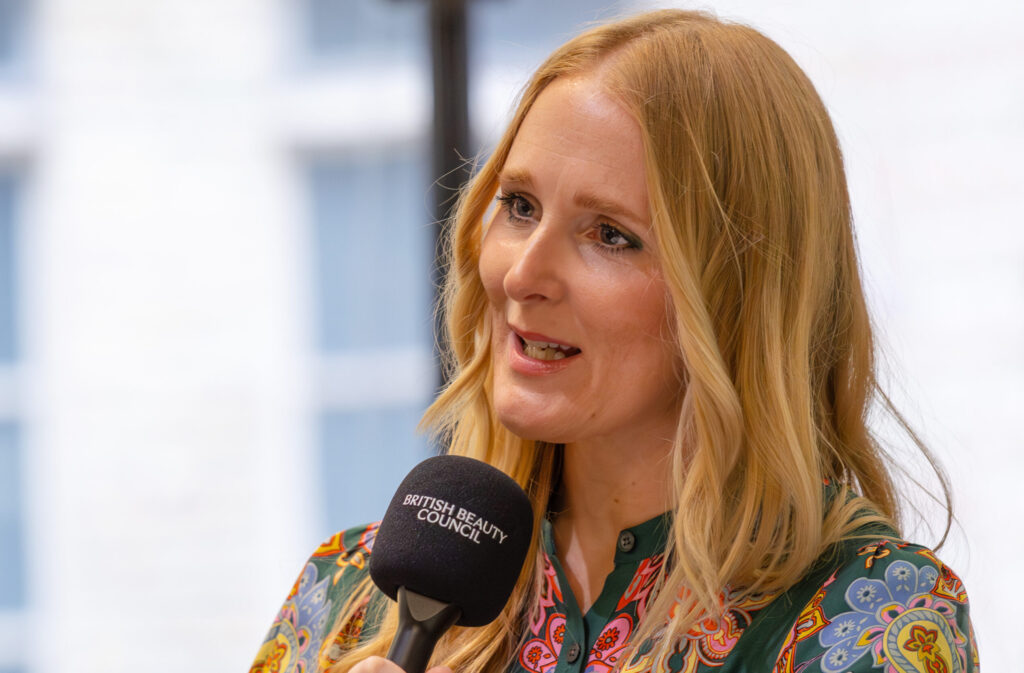
“This has been an issue close to my heart and a core focus of our work since the conception of the Council, “says Mille Kendall OBE, CEO of the British Beauty Council. “The classifications were outdated and no longer represented the breadth of the multi-faceted industry. We have been told time and time again that it’s near impossible to change how our industry is listed as it was a global coding system; but we persevered and developed a strong argument for change with the support of our stakeholders. This fantastic win will always be one of my proudest achievements.
While it has taken time, this reform represents a significant and practical way we can support hairdressing and beauty businesses in navigating their unique economic challenges.”
What happens next?
The updated codes and explanatory notes have now been set out, with further recommendations from the Council to ensure the language accurately reflects today’s professional services landscape.
Implementation within the UK’s statistical systems including the ONS and Government Statistical Service is expected to take place in phases over the coming years.
This is a landmark step forward. But as ever, the work continues. By ensuring our industry is properly reflected, we are ensuring it is properly valued — now and for generations to come.
About the British Beauty Council
The British Beauty Council is a not-for-profit organisation that unites the beauty industry and collaborates with a diverse network of patrons and affiliates to drive growth by influencing policy, raising standards and creating access and opportunity — for a sustainable and equitable future.