Biotech ingredients are expected to drive 34% of premium beauty sales by 2029. This British Beauty Week, we brought together leaders from across the beauty industry to explore the power of biotech, the challenge facing adoption, and their hopes for the future of beauty.
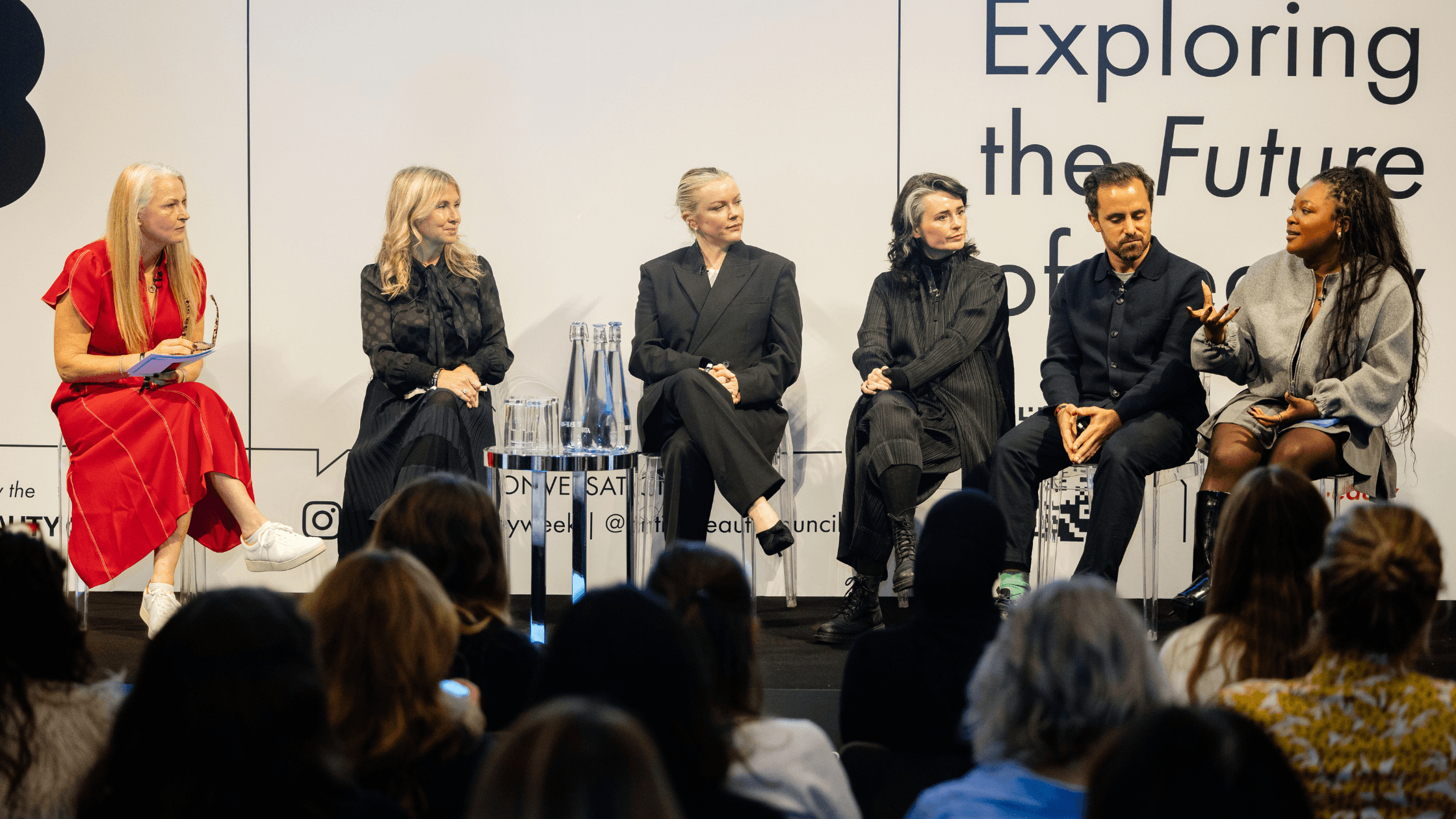
Supported by Neal’s Yard Remedies, the panel ‘Beauty’s Gone Beyond Plant-based’ featured Anabel Kindersley, Owner and CEO of Neal’s Yard Remedies; Joanna Ellner, Founder and CEO of skincare brand REOME; Lauren Bowker, Founder of The Unseen; Amir Afshar, Co-founder of Shellworks; and Tendai Moyo, founder of hair brand Ruka.
From packaging to hair extensions, ingredient design and marketing, all of the experts brought unique insights to the discussion. Below are our key takeaways.
But first, what exactly is biotech? According to Aurelie Brunel, Product Innovation Manager at THG LABS, it is: ‘The use of biological processes to create sustainable, natural and potent beauty ingredients under the scrutiny of experts, these are lab-grown and developed thanks to living systems and organisms (including fermentation).
Now, to the panel:
Marrying biotech with natural ingredients
Kindersley kicks off by stating the importance of the ‘sweet spot’ between natural ingredients and biotechnology. She says: ‘(From my perspective), it’s about the two worlds existing together. The power of therapeutic, natural plants is still strong, and we mustn’t forget that, but enhancing them is even better.’
She points towards the brand’s leading frankincense range that was recently reformulated to include biotechnological ingredients, highlighting that results for skin were even stronger thanks to the ‘efficacy’ and ‘precision’ you can get from newer ingredients.
Afshar highlights the importance of nature and Earth’s existing systems for biotechnology, too – without microorganisms found in healthy soil, he would not be able to create packaging or enable it to break down either.
‘(We are at a) new paradigm where instead of taking, making and creating waste we are working to excel how nature works – nature does not create waste, it is a completely man-made thing.’
Scalability and investment
As with any novel technology, the struggle to adopt lies with the economies of scale and the investment opportunities in the inventions.
Bowker says: ‘There is so much great science coming out of university and young scientists’ minds, but we have this “valley of death” where getting those innovations through to scale is the hard part… There is a gap between what is going on in the great ideas and inventions space, through to what we are seeing on the shelf.’
She reiterates that this will only be changed if everyone in beauty – not just the big guys – makes one small step to embracing sustainable innovation.
Ellner backs this up and is optimistic: ‘Generally right now, biotech ingredients are more expensive, but that will change as more people adopt them. It is happening.’
Finding your niche
Biotech is exciting, but all of our experts agree that harnessing it is your opportunity to take the ‘naturally-derived lab-grown ingredients to the next level. Moyo’s collagen hair extensions are the perfect example of this, created not because of biotech but because of consumer need.
‘I didn’t intend to go into biotech at all,’ she explains. ‘Human hair is sourced pretty unethically… and plastic hair extensions are cheap but bad for the environment. So, we sought to create an alternative fibre and have raised £10m to do so over the last two years.’
Moyo continues: ‘Sustainability came as a byproduct of creating better products for safety and performance.’
Both Kindersley and Ellner agree that biotech has the potential to up the performance of products – we just have to get better at communicating that to the consumer.
Certification and regulation
Language, communication, and lexicon are all things that the panel is keen to pin down. With biotech and beauty being a new convergence, they all see space for certification and regulation when it comes to claims and promises in biotech.
‘There is so much misinformation and confusion around these terms… (We may) need to create a biotech certification because we are in a place where this is a very buzzy industry and a lot of brands are using the terminology – perhaps with some creative licence,’ explains Ellner.
And, this could be going some way to stifle real innovation in the space too, according to Bowker: ‘(Growing ingredients) that we have never seen before is exciting, but the realist in me says: “Are we ever going to get there?” Because, until people make a switch at board level and don’t just use it as marketing, it’s always going to be a marketing project.’
You can watch the full video here:


