Beauty’s Race to Win: Unlocking the Sport Opportunity
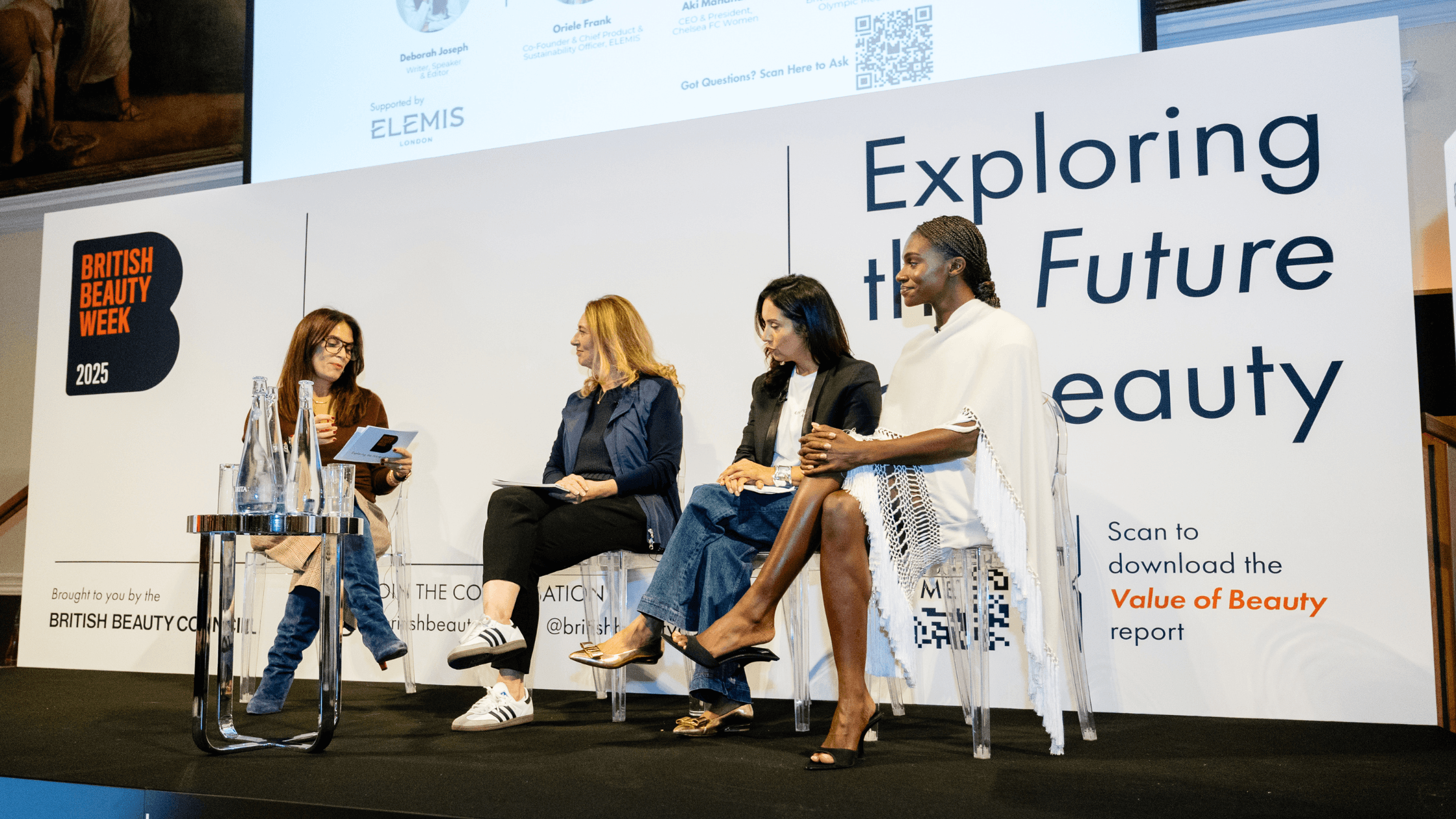
Writer and Editor Deborah Joseph chatted to Oriele Frank, Co-Founder and Chief Product & Sustainability Officer at Elemis; Aki Mandhar, CEO & President of Chelsea FC Women; and Dina Asher-Smith, British record holder and Olympic medallist.
Statistics from the Business of Fashion reveal that the global sports sponsorship market is worth £115 billion and is set to rise to £160 billion by 2030. So who is tapping into this growing space? Beauty and wellness brands such as Elemis, Charlotte Tilbury and Fenty Beauty are partnering with sports organisations to extend their reach and align with a largely untapped market.
Reaching new audiences
Elemis recently signed a multi-year partnership deal with Aston Martin. For Co-Founder Oriele Frank, the aim was to tap into the increasing female audience watching F1 (45% of viewers for the F1 series Drive to Survive were female) and help shift the narrative. With typical sport sponsors being whisky or watch brands, Oriele admits it felt like a curveball when first raised in the boardroom. For Elemis, success meant expanded reach – bringing that 47% female Drive to Survive audience into the fold. In the first three months alone, they saw a 25% increase in audience reach on social media.
Elemis now runs pit-stop activations at F1 sites, offering facials and treatments in the paddock area. This caters to the growing female F1 audience in a way the sport hasn’t seen before. It underscores that these partnerships aren’t just about promoting beauty products – they celebrate confidence, performance, belonging and women’s presence across all areas of life. Aki Mandhar echoes this, noting it’s about ‘creating authentic partnerships to destigmatise aspects of the female experience.’ Chelsea Women’s FC recently illustrated this through their partnership with period brand Flo, opening up conversations about periods to their mixed-gender, multigenerational audience.
Beauty on the track / pitch
Do beauty and sport intertwine? Dina Asher-Smith thinks they do. Just as there are beauty rituals, there are rituals in sport – and for her, they overlap. Dina always leaves an hour before a race for glam, saying ‘it’s the start of my race.’ The transformative power of beauty, she says, allows her to stand on the start line as her ‘fullest and most vibrant self.’ But she also reminds us that beauty is about feeling your absolute best – whether that means a full glam routine, a simple moisturiser, or just having had a nice shower before a match. ‘There’s not one way to do beauty. There’s not one way to do sport. There’s not one way to do womanhood.’ There is no single way to be an athlete and present beauty on the field of play. Dina recently partnered with Isamaya Ffrench and emphasised that they are ‘both performers.’ ‘Beauty is an essential part of who I am… I wouldn’t dream of not bringing it to the track.’
What’s next for beauty in sport?
For Oriele, the answer lies in brands and businesses continuing to support women’s sport through sponsorship. This doesn’t have to start at Six Nations level – begin by sponsoring or donating to your local girls’ grassroots rugby team. The more investment women’s sport receives, the more visibility it gains, and the more girls will want to join their local clubs, hopefully helping to curb the drop-out in sport among girls aged 11-14.
Aki Mandhar agrees, arguing that aligned product partnerships give girls opportunities to feel connected to the sport or athlete and encourage them to get on the pitch. She also stresses how big the opportunity is for brands: ‘The thing about our audience is that they’re always in market.’ Sports fans don’t just want to buy one football shirt per season – they want more ways to feel connected to their team or favourite player. Chelsea FC Women recently launched a partnership with jewellery brand D. Louise that flew off shelves.
Dina Asher-Smith adds that ‘sport needs to be part of the narrative about what it means to be a woman.’ She notes that sport gives you not only lifelong friendships but also diplomatic social skills that can prove valuable in professional settings. Whether you’re a manager or a CEO, you may find yourself drawing on the skills you learnt in your netball team to diffuse situations or uplift others.
You can watch the full interview below: